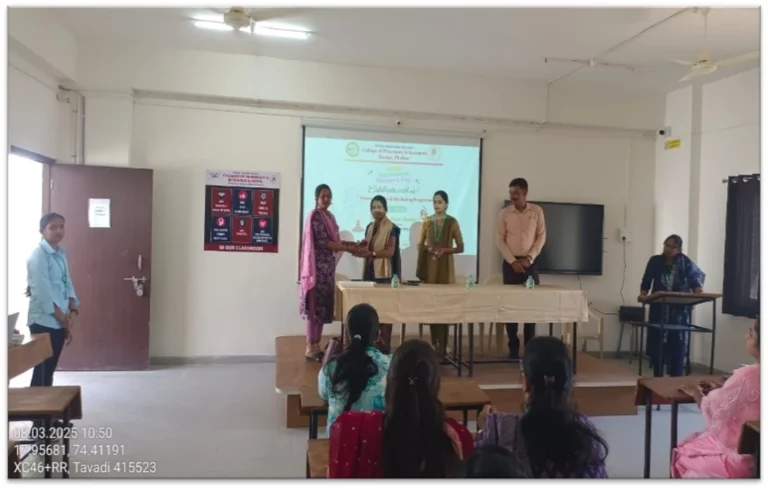
Art of Living Pranayama & Meditation Programme at PES College of Pharmacy Phaltan
The Art of Living Pranayama & Meditation Programme at PES College of Pharmacy Phaltan was organized to introduce students and staff members to practices that support concentration, relaxation, self-discipline and overall well-being. The healthcare programme was conducted by Phaltan Education Society’s College of Pharmacy & Research Center, Phaltan, during the Academic Year 2024–25.
The programme was held on 7 March 2025 in the college auditorium and had a duration of two hours. A total of 35 students and staff members participated. The activity was coordinated by Prof. Zite S. B. and Prof. Zanjurne N. R.
The central theme of the programme was the practical introduction of Pranayama and Meditation. Students were guided through breathing and meditation practices such as Bhastrika Pranayama, Anuloma-Viloma and mindfulness meditation. The programme provided participants with an opportunity to understand these practices and experience them under guidance.
Art of Living Healthcare Programme at PES College of Pharmacy
Student life involves academic responsibilities, practical sessions, examinations, assignments and continuous learning. Along with professional knowledge, educational institutions can also create opportunities that encourage students to develop healthy routines, concentration and self-discipline.
With this objective, the college arranged the healthcare programme for both students and staff members. According to the programme report, its primary purpose was to familiarize students with the traditional practices of Pranayama and Meditation and provide a platform for practising these techniques.
The initiative reflects the college’s effort to combine academic education with activities focused on the overall development and well-being of students.
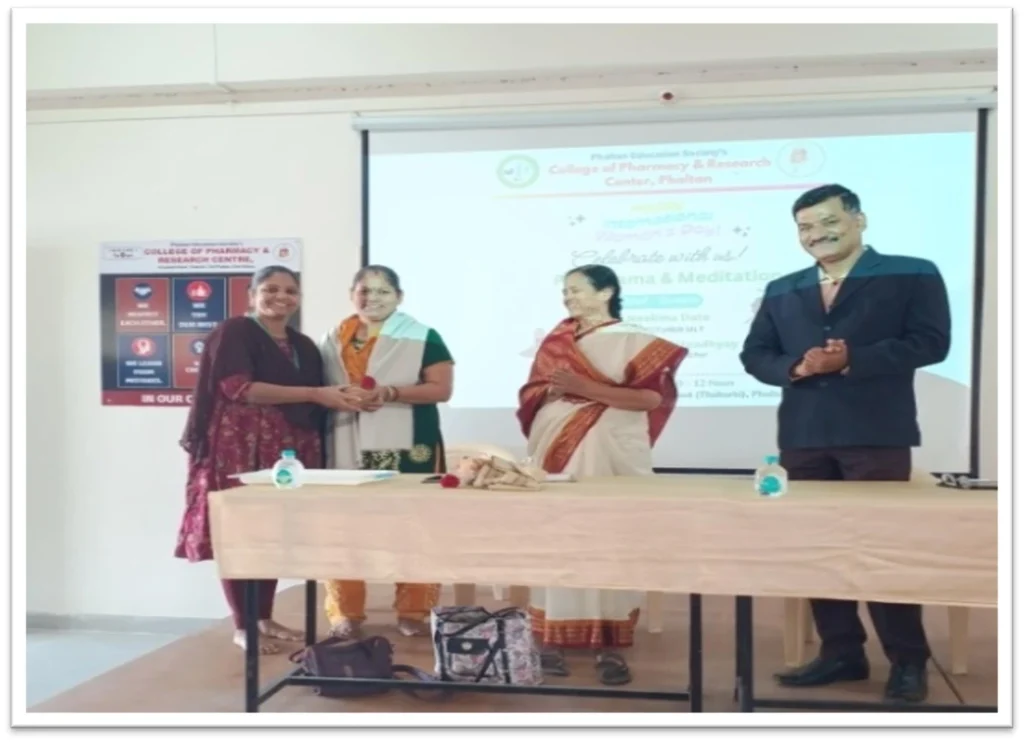
Welcome and Introduction to Pranayama & Meditation
The programme began with a welcome address by Principal Dr. Vikram Deshmukh. This was followed by an introduction to Pranayama and Meditation by Dr. Neelima Date. The participants were subsequently guided through Pranayama and meditation exercises led by Mrs. Jayashri Upadhyay.
The programme was not limited to theoretical information. Students actively participated in the practical session, which made the activity more engaging and meaningful.
Dr. Neelima Date guided students regarding the importance of Pranayama and Meditation in everyday life, while Principal Dr. Vikram Deshmukh also interacted with and guided the students during the programme.
Understanding the Importance of Pranayama
Pranayama is an important component of traditional yoga practice and focuses on developing awareness and regulation of breathing. The Ministry of AYUSH’s Common Yoga Protocol describes Pranayama as developing awareness of breathing followed by regulated respiration, with an emphasis on awareness and control of the mind.
For students, a structured breathing session can also provide a valuable break from a demanding academic routine. The college programme therefore focused on giving participants direct experience of these practices rather than simply explaining them.
Practice of Bhastrika Pranayama
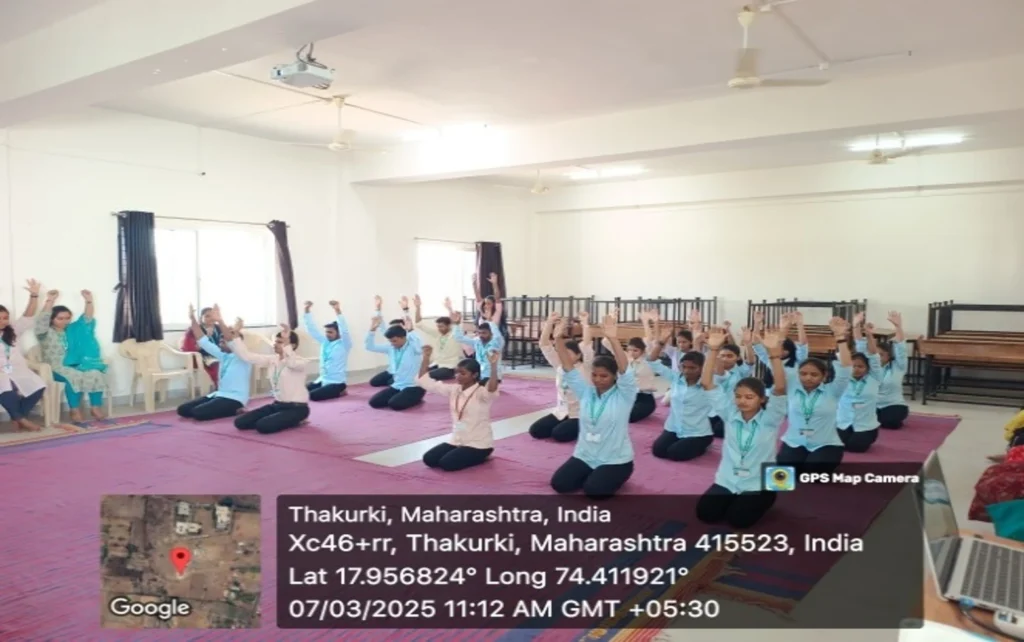
One of the important activities conducted during the programme was Bhastrika Pranayama. Students participated together under guidance, creating an interactive learning environment.
The photographs included on page 3 of the programme report document students practising Bhastrika Pranayama as part of the healthcare activity.
Anuloma-Viloma Pranayama Session
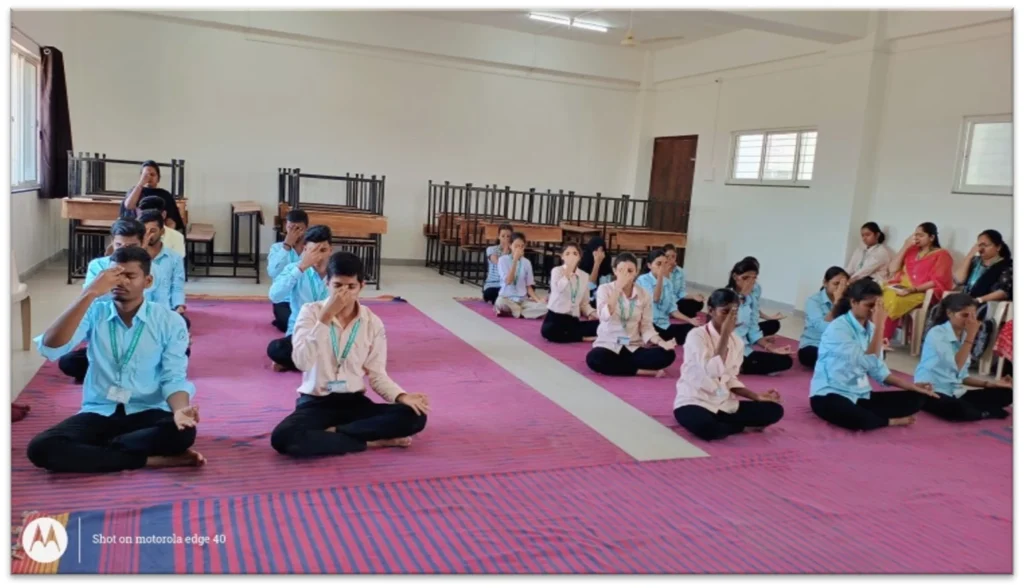
Students also practised Anuloma-Viloma Pranayama during the programme. This gave participants exposure to another breathing technique in a supervised group setting.
The programme report highlights this practice as one of the important components of the activity.
Introducing students to different breathing practices can help them understand that yoga and Pranayama involve structured techniques rather than being a single exercise. Such practical exposure also makes wellness education more participatory.
Meditation and Mindfulness Practice
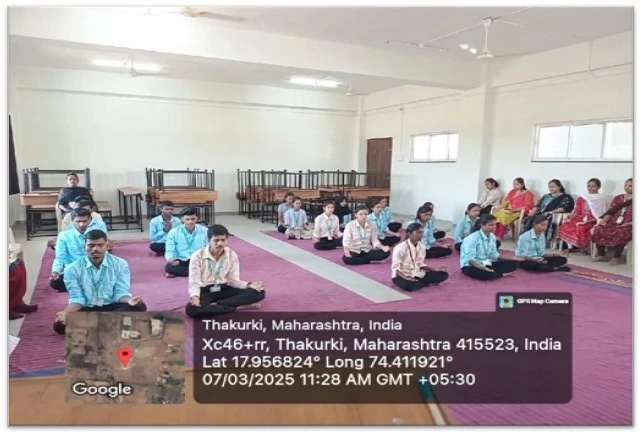
Meditation formed another major part of the Art of Living healthcare programme. Participants practised mindfulness meditation by focusing attention on their breathing and allowing distractions to pass.
The Ministry of AYUSH describes Dhyana (meditation) as contemplation and focused attention. Its yoga guidance also discusses meditation as a practice for calming and relaxing an agitated mind.
This aspect of the programme was particularly relevant in an educational environment because students frequently need sustained attention during lectures, laboratory work, examinations and independent study.
Supporting Student Well-Being Through Healthy Activities
Academic achievement is important, but student development also involves physical and mental well-being, communication, discipline and the ability to manage everyday academic responsibilities.
The World Health Organization notes that regular physical activity can contribute to mental health, cognitive health and overall well-being. WHO has also highlighted yoga as a mind-body practice that can support stress relief, emotional balance and overall physical and mental well-being.
Programmes involving yoga, breathing practices and meditation can therefore complement the broader student-development activities conducted by educational institutions.
At the same time, such college programmes should be understood as educational and wellness activities rather than substitutes for professional medical or mental-health care when it is needed.
Active Participation of Students and Staff
An important feature of the programme was the participation of both students and staff members. The report records a total of 35 participants.
Group activities can make wellness programmes more engaging because participants learn and practise together. Instead of merely listening to a lecture, students were able to perform the breathing exercises and meditation techniques during the session.
The photographs documented in the report also demonstrate active student involvement throughout the programme.
Positive Response from Participants
According to the official activity report, participants responded positively to the programme. They reported feeling more relaxed and focused, and many expressed an interest in continuing the practice of Pranayama and meditation.
This feedback indicates that the programme successfully generated interest among participants and fulfilled its objective of introducing students to these practices.
For pharmacy students in particular, participation in diverse educational, healthcare and student-development activities can complement classroom learning and encourage a broader understanding of health and well-being.
College Commitment to Holistic Student Development
Phaltan Education Society’s College of Pharmacy & Research Center, Phaltan regularly provides students with opportunities extending beyond conventional classroom teaching. Activities related to healthcare, professional education, awareness, practical exposure and student development can contribute to a more engaging campus environment.
The Art of Living Pranayama & Meditation Programme is one such initiative. By bringing students, staff members, faculty coordinators and invited guests together, the programme provided an opportunity to learn and practise simple wellness techniques in an organized academic setting.
Such activities can also encourage students to appreciate the importance of balancing academic responsibilities with healthy daily habits.
Conclusion
The Art of Living Pranayama & Meditation Programme at PES College of Pharmacy Phaltan was a meaningful healthcare initiative conducted on 7 March 2025 for students and staff members.
Under the guidance of Dr. Neelima Date and Mrs. Jayashri Upadhyay, participants were introduced to Pranayama and meditation and practised techniques including Bhastrika, Anuloma-Viloma and mindfulness meditation. Principal Dr. Vikram Deshmukh, along with activity coordinators Prof. Zite S. B. and Prof. Zanjurne N. R., contributed to the successful organization of the programme.
The positive response recorded from participants demonstrates the value of conducting such student-oriented healthcare and wellness activities on campus. The programme added another valuable dimension to the college’s efforts toward the overall development of pharmacy students.
Important Links
- Home: https://pescopharmacy.edu.in/
- Activities/Events: https://pescopharmacy.edu.in/activities-events/
- B. Pharmacy: https://pescopharmacy.edu.in/b-pharmacy/
- D. Pharmacy: https://pescopharmacy.edu.in/d-pharmacy/
- Facilities: https://pescopharmacy.edu.in/facilities/
- Contact: https://pescopharmacy.edu.in/contact-pescop/
For authoritative external resources, you can visit World Health Organization – Physical Activity to WHO Physical Activity guidance and Ministry of AYUSH – Common Yoga Protocol to Ministry of AYUSH Common Yoga Protocol.
Related articles
Continue exploring useful stories from our college.