Gas Safety in House and Laboratory Workshop at College of Pharmacy & Research Center, Phaltan
Gas Safety Workshop in Pharmacy College was organized by Phaltan Education Society’s College of Pharmacy & Research Center, Phaltan, on 20 March 2025. The workshop, titled “Gas Safety in House and Laboratory,” aimed to create awareness among students and staff about safe gas handling, storage, gas leak detection, emergency response, first aid, and laboratory safety. The program provided practical knowledge to help participants understand important precautions for preventing gas-related hazards in homes and laboratories.
Gas safety is an important subject for pharmacy students because laboratories may involve equipment, cylinders, burners, and other systems where proper safety practices are essential. The workshop therefore focused not only on theoretical awareness but also on practical precautions that can help prevent gas leaks, fires, explosions, and other avoidable accidents.
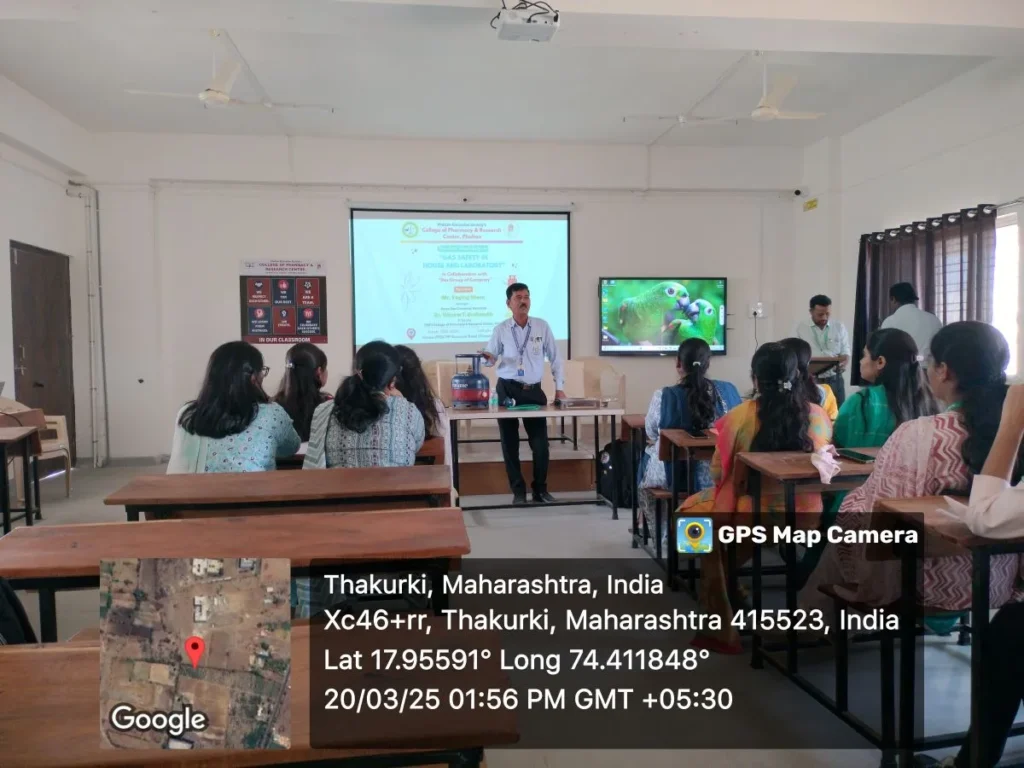
The program was held from 1:30 PM to 3:00 PM in Classroom No. 1, with Prof. S. S. Kavitake serving as the Activity In-Charge. Hon. Mr. Yogiraj Dhere, Manager at Surya Gas Company, Baramati, was invited as the resource person. A total of 60 students and staff members participated in the workshop.
Importance of Gas Safety Awareness
Gas is commonly used in homes, industries, educational laboratories, research facilities, and many other workplaces. Although it is extremely useful, improper handling can create serious safety risks. Gas leakage in a poorly ventilated area, incorrect cylinder storage, damaged equipment, or lack of awareness during an emergency can potentially lead to fire, explosion, or injury.
The Gas Safety in House and Laboratory Workshop was therefore designed to help participants understand these risks and learn basic preventive measures. According to the activity report, the workshop emphasized the importance of preventing hazards such as gas leaks, fires, and explosions in both residential and laboratory environments.
For pharmacy students in particular, developing a safety-oriented mindset is an important part of laboratory education. Students should understand that laboratory safety is a shared responsibility and that following standard operating procedures can protect themselves, their classmates, faculty members, laboratory staff, equipment, and institutional facilities.
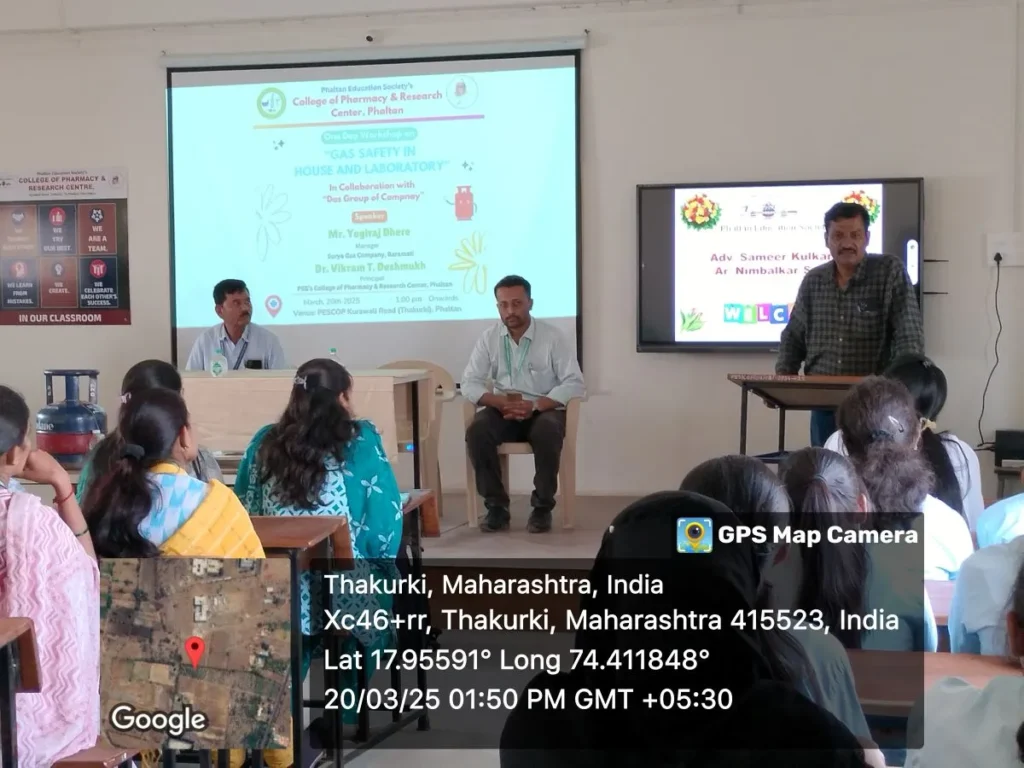
Expert Session by Mr. Yogiraj Dhere
A major highlight of the workshop was the expert guidance provided by Mr. Yogiraj Dhere, Manager at Surya Gas Company, Baramati. His professional experience helped participants understand gas safety from a practical point of view.
The activity report identifies four important areas covered during the session: gas types and hazards, gas leak detection and safety measures, emergency response and first aid, and safe handling and storage guidelines.
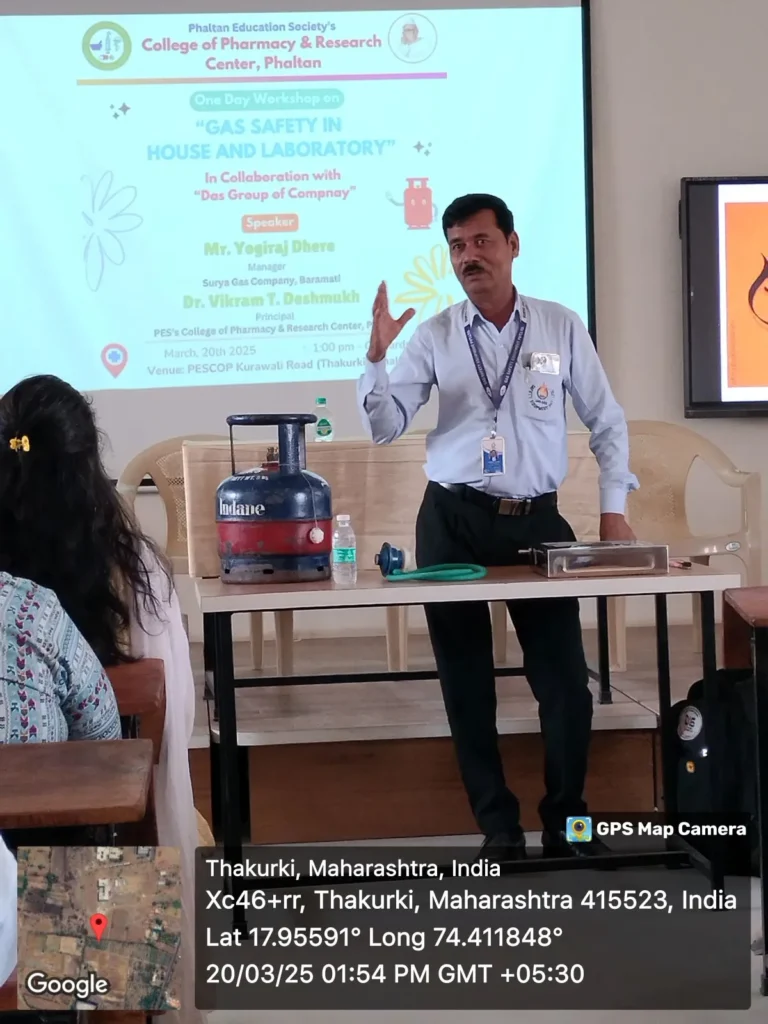
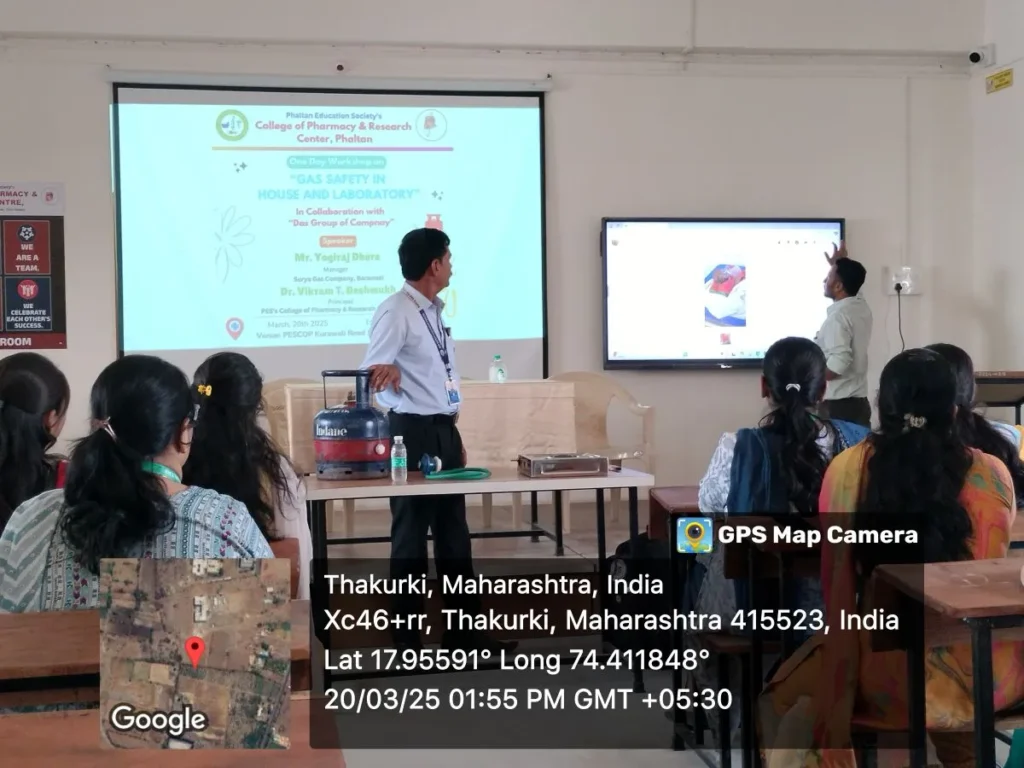
The photographs included on page 2 of the report also document the workshop. They show Principal Dr. Vikram Deshmukh addressing the participants and Mr. Yogiraj Dhere conducting and delivering the gas safety session.
Such expert-led activities provide students with an opportunity to connect classroom knowledge with situations they may encounter in laboratories, workplaces, industries, and everyday life.
Gas Types and Potential Hazards
One of the key topics highlighted during the program was awareness of different gas-related hazards. A gas-related accident may occur because of leakage, improper installation, poor ventilation, unsafe storage, or inappropriate handling of cylinders and associated equipment.
Understanding the potential hazard is the first step toward prevention. Students and staff should remain attentive to unusual smells, suspected leaks, damaged connections, or unsafe storage conditions. Laboratory users should also follow the safety instructions applicable to the specific gases and equipment being used.
The workshop helped reinforce an important message: prevention is more effective than responding after an accident has occurred.
Safe Handling and Storage of Gas Cylinders
Proper handling and storage of gas cylinders was another important objective of the workshop. The report specifically notes that the session aimed to demonstrate proper handling and storage of gas cylinders and emphasize the importance of ventilation.
Safe handling begins with responsible behaviour. Cylinders and gas-related equipment should be used only according to applicable instructions and institutional safety procedures. Storage areas should be suitable for the material being stored, and users should understand what to do before operating equipment.
In educational laboratories, students should work under appropriate supervision and follow laboratory rules. They should never treat safety instructions as optional, even during routine practical sessions.
These habits are especially relevant to pharmacy education, where laboratory discipline, accurate procedures, safe chemical handling, and responsible use of equipment form an important part of professional training.
Importance of Proper Ventilation
The workshop also emphasized ventilation as an important gas safety consideration.
Good ventilation helps reduce the possibility of dangerous accumulation when gas is unintentionally released. Laboratories and other areas where gas is used should therefore follow appropriate safety standards for ventilation and equipment operation.
Students should also become familiar with laboratory safety arrangements before beginning practical work. Awareness of exits, emergency procedures, safety equipment, and institutional instructions can improve preparedness during an unexpected situation.
Gas Leak Detection and Safety Measures
Gas leak detection and related safety measures were specifically included among the workshop topics.
Recognizing a possible problem early can help prevent a more serious incident. Participants were encouraged through the workshop to understand the importance of remaining alert and responding responsibly rather than ignoring warning signs.
For students, this awareness has value beyond the college laboratory. Basic gas safety knowledge can also be useful at home and later in professional environments such as laboratories, pharmaceutical facilities, hospitals, research centres, and industries.
Emergency Response and First Aid Awareness
Knowing how to prevent an accident is important, but knowing how to respond to an emergency is equally valuable. Emergency response and first aid were among the core topics highlighted during the workshop.
Emergency situations require calm, informed, and responsible action. Students should know their institution’s emergency procedures and immediately seek assistance from responsible staff or emergency services when necessary.
Safety workshops can strengthen preparedness because they expose students to situations that may not be fully understood through textbook learning alone. When practical demonstrations, expert guidance, and discussion are combined, students can develop a clearer understanding of how safety principles apply in real situations.
Active Participation by Students and Staff
The workshop received active participation from students, faculty members, and laboratory staff. Participants took part in discussions and practical demonstrations during the session. The official report also notes that feedback was highly positive and that many participants expressed increased confidence in handling gas safely after attending the workshop.
This active involvement was an important aspect of the program. Safety education becomes more meaningful when participants have opportunities to interact with an expert, discuss practical concerns, and understand precautions through demonstration.
With 60 participants, the workshop successfully brought students and staff together around a common objective—building a safer and more responsible environment.
Building a Strong Safety Culture in Pharmacy Education
Safety awareness should be a continuous part of pharmacy education. Students regularly participate in practical work, and responsible laboratory behaviour can contribute significantly to creating a safe academic environment.
Programs such as the Gas Safety in House and Laboratory Workshop complement regular classroom teaching by introducing practical safety awareness. They encourage students to think about prevention, risk identification, safe equipment handling, emergency preparedness, and personal responsibility.
The knowledge gained through such programs can remain useful even after students complete their education. Pharmacy graduates may work in pharmaceutical industries, quality-control laboratories, research centres, hospitals, community settings, or other professional environments where safety procedures are essential.
Useful Internal and External Resources
Recommended links:
College Activities & Events → https://pescopharmacy.edu.in/activities-events//activities-events/
College Facilities → https://pescopharmacy.edu.in/facilities//facilities/
Latest College Blog → https://pescopharmacy.edu.in/blog//blog/
Contact College → https://pescopharmacy.edu.in/contact-pescop//contact-pescop/
For authoritative external safety information, you can also visit to the National Disaster Management Authority (NDMA) and Petroleum and Natural Gas Regulatory Board (PNGRB). These external resources can complement institutional safety awareness and provide access to broader official information.
Conclusion
The Gas Safety in House and Laboratory Workshop at College of Pharmacy & Research Center, Phaltan was an important safety-awareness initiative for students and staff. Organized on 20 March 2025, the workshop provided practical awareness about gas-related hazards, leak detection, safe handling and storage, ventilation, emergency response, and first aid.
Under the coordination of Prof. S. S. Kavitake, the program benefited from the expert guidance of Mr. Yogiraj Dhere, Manager at Surya Gas Company, Baramati. The participation of students, faculty, and laboratory staff made the workshop interactive and educational. The positive participant feedback reported by the college further reflects the value of the program.
Through workshops like this, Phaltan Education Society’s College of Pharmacy & Research Center, Phaltan can continue to promote practical learning, laboratory safety awareness, responsible behaviour, and a strong culture of prevention among pharmacy students.
Related articles
Continue exploring useful stories from our college.